 @itsadvena
 fortivinnfeyna
Either Way
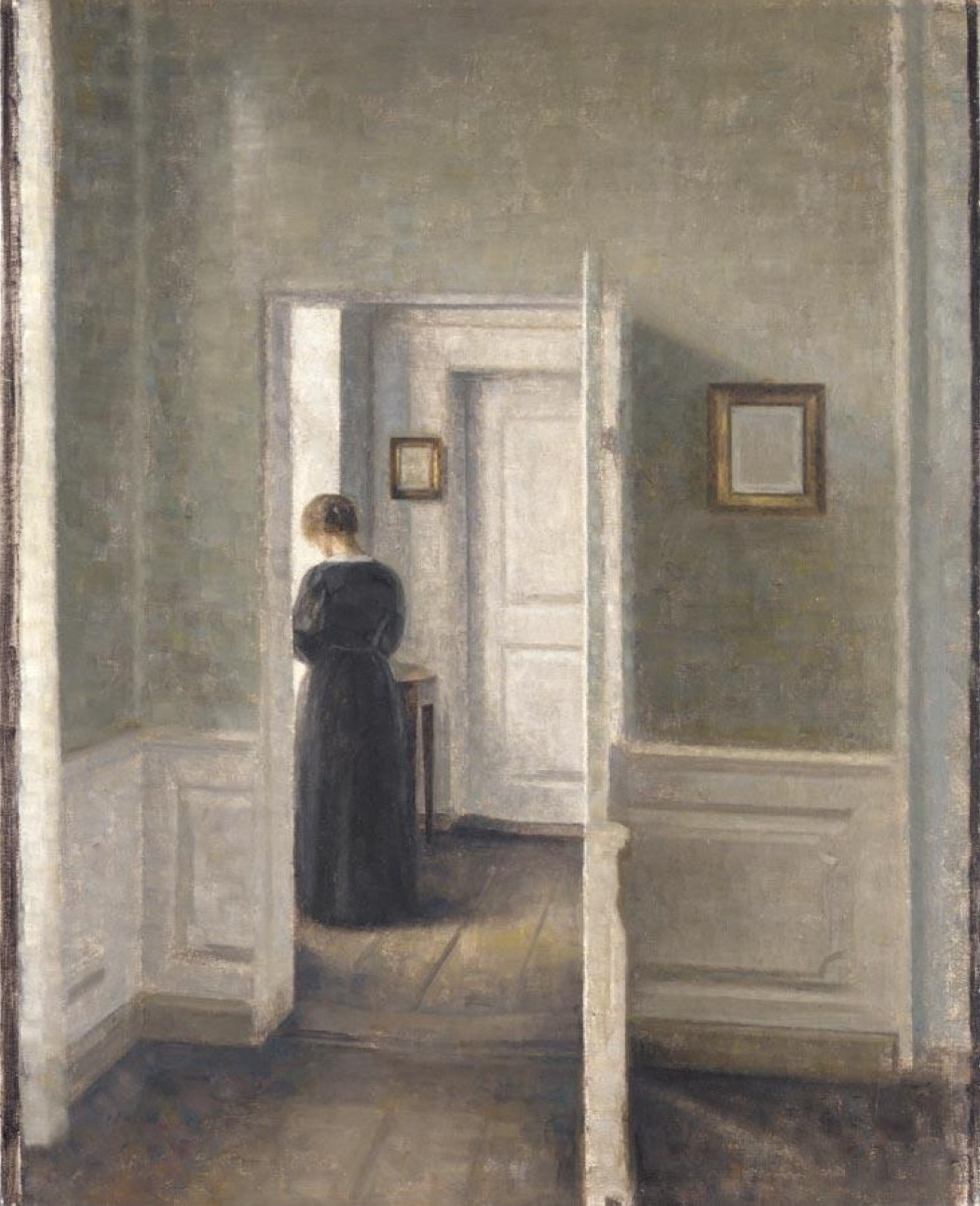
Interior with a Woman Standing, 1913 - Vilhelm Hammershøi
Kierkegaard paced. The ring was in his coat. He kept touching it through the wool like a wound he couldn’t leave alone.
One year since he’d proposed. Regine had probably bought something for the anniversary. She was like that. Thoughtful. Normal.
He stopped at the window. Her house was three streets over. Yellow light in the upstairs window, she was reading. Or sewing. Or doing whatever it was people did when they weren’t being torn apart from the inside.
Just marry her. You love her. This is what people do.
But his hands were shaking. Had been shaking since August when he’d first realized he couldn’t do it. Couldn’t be what she needed. Couldn’t sit across from her at breakfast every morning for forty years and not eventually start screaming.
That wasn’t fair. She wasn’t the problem.
He was the problem. He’d always been the problem.
Regine laughed at parties. Regine made friends. Regine existed in the world like she belonged there. Meanwhile he disappeared into his study for days at a time, emerging with notebooks full of theories about despair that made his father change the subject. Perhaps you should take up riding, Søren. Fresh air.
The manuscripts on his desk accused him. Half-finished. All of them. Something about faith and the individual and the crowd. Important work. Maybe. If he ever finished it.
Would he finish it if he married her?
You’ll become like the others. A bourgeois husband. Discussing shipping tariffs at dinner parties while your real thoughts rot in a drawer somewhere.
But the alternative. Forty years old and alone. His father’s voice: The name dies with you.
He’d spend every Christmas watching his married friends and their fat happy children. He’d become one of those professors who stayed late at faculty gatherings, lingering over bad wine because going home meant silence and cold soup and no one to tell about his day. Not that he wanted to tell anyone about his day. But still.
God, though. The other thing. Watching her realize what she’d married. The way her face would change over the years. Confusion first. Then concern. Then something worse.
Why won’t you come to the Andersens’ dinner? Why do you lock the door?
Why don’t you look at me anymore?
He would love her. That was the thing. He would love her while watching himself disappoint her, day after day, until she either left or became someone else. Someone diminished. Someone who’d learned not to ask for things.
“Marry, and you will regret it; don’t marry, you will also regret it”
He’d written that. Months ago. About the aesthetic stage or some such. Now it felt less like philosophy and more like a curse he’d pronounced on himself.
Tomorrow he’d have to choose. Break her heart quick or break it slow. Be the villain who abandoned her or the husband who failed her.
Either way, he’d spend the rest of his life wondering.
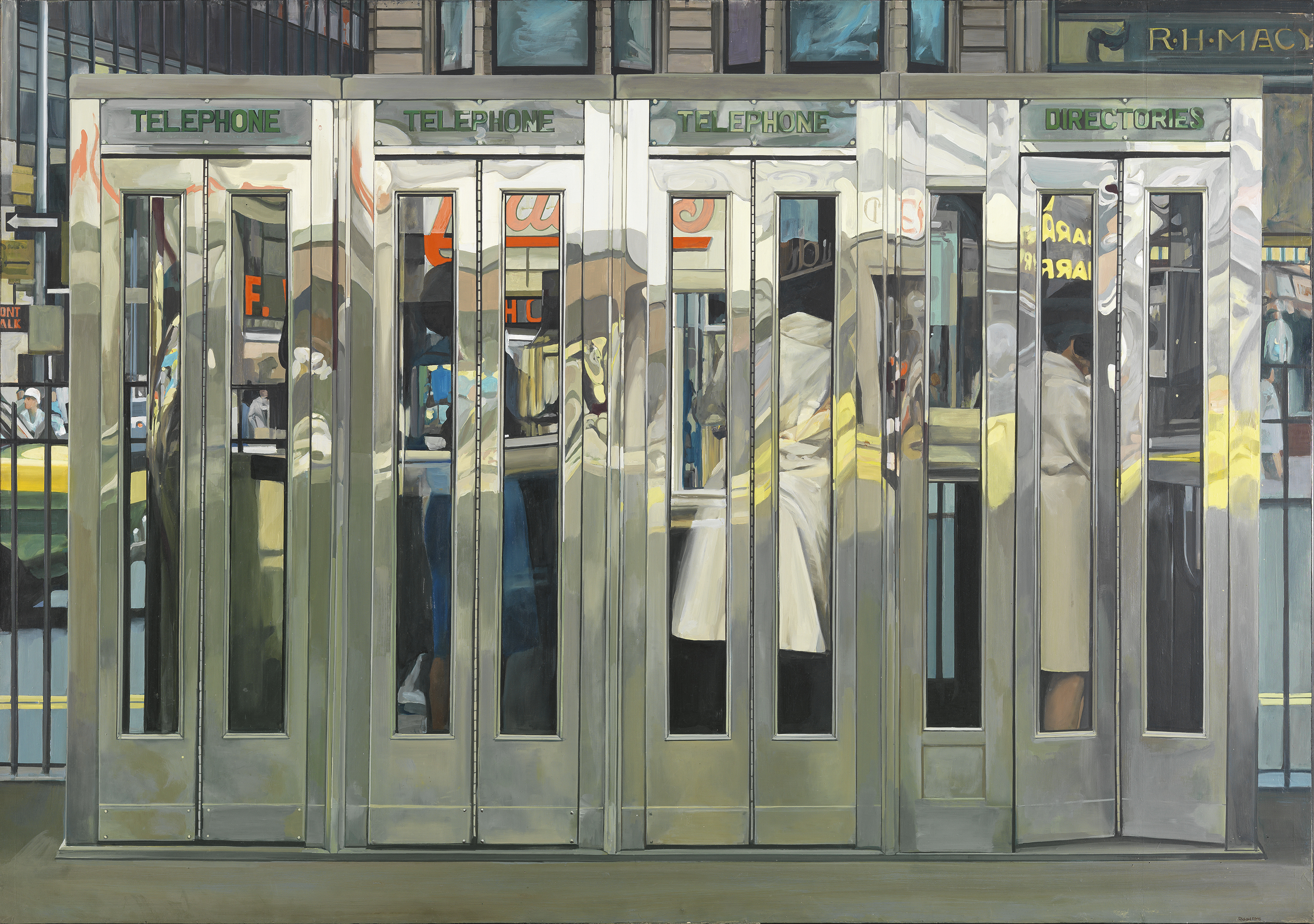 Telephone Booths, 1967 - Richard Estes
Swanson stared at the chart.
The V-shaped recovery looked like the market was laughing at her. Which it was. The market didn’t care, but if it did, it would absolutely be laughing.
His stop-loss had triggered at 11:47. Hype was now up eighteen percent from where she’d sold.
You followed the rules. You protected capital.
He’d protected capital right into a loss that wiped out two months of gains. Meanwhile everyone who’d held, the idiots, the gamblers, the lucky ones, was up.
His phone buzzed. Benson: “Saw you took the L on Hype. Brutal reversal.”
Of course he saw. Wins were invisible. Losses were billboards.
He got up. Sat back down. The chart wasn’t going to change.
What if I’d just—
No. Stop. That way lies ruin. He’d seen it happen. Guys who couldn’t take the L, who doubled down, who let one bad trade turn into account-destroying revenge trading because they needed the market to admit they’d been right.
At least he had capital left. At least he’d followed the rules.
But fuck, man. Fuck. He’d done everything right. He’d assessed the risk, set the stop, accepted the premise of the trade. And then the market had done the one thing that made her look maximally stupid.
That was trading. Making decisions with incomplete information and then watching reality make you look like an idiot. Or a genius. Same decision, different outcome.
He’d check tomorrow. Hype would be up another five percent, or down ten. Either one would feel like a message meant specifically for him. Neither would be.
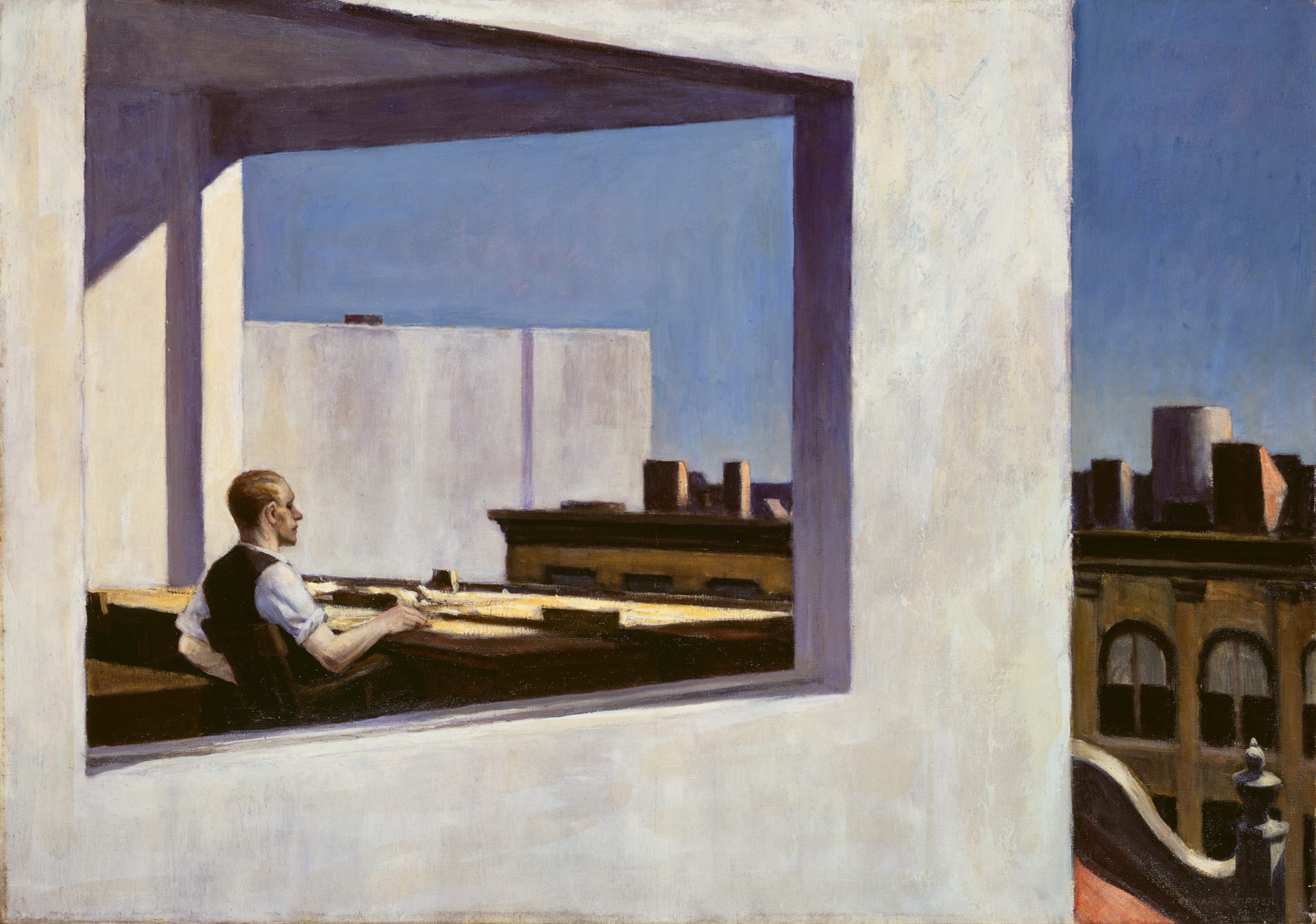 Office in a Small City, 1953 - Edward Hopper
Chang made the dog’s eyes 2% larger. Now it looked aspirational. Or maybe insane. Hard to tell the difference in advertising.
Three PM. Tuesday. His tenth year at the agency.
This is your life. Making dogs smile for money.
The conference room smelled like stress and KIND bars. Sarah from accounts had eaten three of them since lunch. She was doing the thing with her jaw that meant the client had notes.
“They want the deck by five. Can you make the logo bigger? And they’re thinking the dog needs to look more… ‘aspirational.’”
“Define aspirational.”
“You know. Like it has goals.”
“The dog has goals.”
“The dog is excited about the future.”
“The dog is excited about forty-dollar kibble.”
Sarah didn’t laugh. Sarah never laughed anymore. None of them did. They were all just tired people making tired things for tired money.
He thought about the coffee shop down the street. The one with the help-wanted sign he’d noticed that morning. Experienced barista wanted. Competitive wages.
He’d stood there for maybe thirty seconds, reading it. Imagining a different life. Waking up early. Pulling shots. Making something small and real and immediate, and then it was done and someone drank it and that was the whole transaction. No revisions. No deck by five. No aspirational dog.
You’d last a month.
He knew this. His feet would hurt. His back would hurt. Some guy in a fleece vest would order an oat milk cortado and complain about the temperature. He’d run out of money. He’d miss the health insurance. He’d come crawling back to advertising and they’d all know he’d tried to escape and failed.
But sometimes, driving past the shop in the morning, he saw the baristas through the window. Laughing at something. Moving with their whole bodies. Present. That was the word. They looked present.
While he sat in traffic, already exhausted, already dreading the day.
His watch buzzed. Stand up. Move around. His body was dying in thousand-dollar chairs.
Version seventeen of the dog stared back at him. Same as version sixteen. Same as all of them. None of it mattered. In six months, the client would hire a new agency. His work would live in some archive folder, never opened again.
Phone buzz. Client notes.
“Can the dog look happier but also more serious about nutrition?”
Somewhere, in another life, another Chang was steaming milk. Feet aching. Checking his phone to see his old colleagues’ promotions. Also wondering if he’d made the wrong choice.
At least this Chang had equity that might vest someday. And dental.
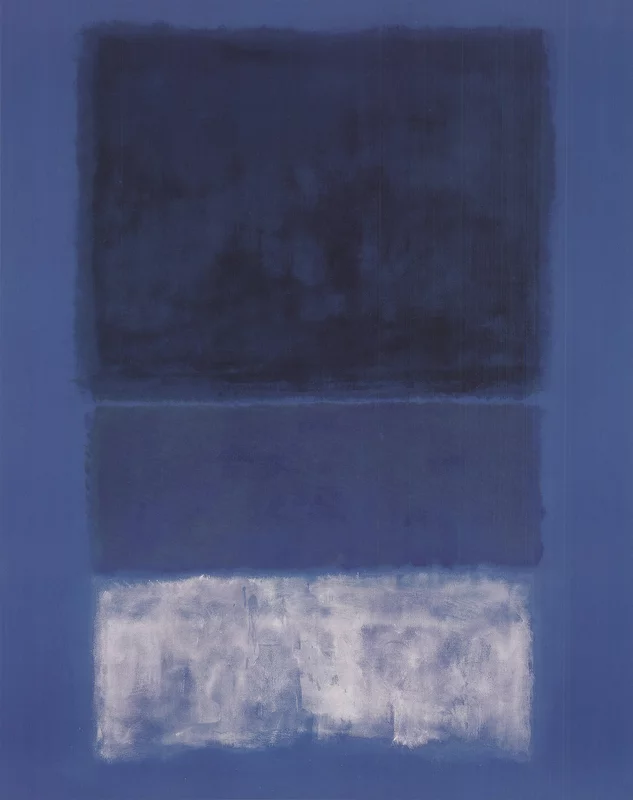 No. 14 (White and Greens on Blue), 1957 - Mark Rothko
“So everyone’s miserable.”
“That’s reductive.”
“Kierkegaard’s miserable, the trader’s miserable, the ad guy’s miserable”
“They’re not miserable. They’re regretting.”
“What’s the difference?”
“Miserable is a state. Regretting is an activity. They’re actively doing something. They’re comparing.”
“Comparing what?”
“Their actual life to some imaginary alternative where they made different choices. And the imaginary version is always better because it doesn’t have to deal with, like, reality.”
“Okay but don’t we need to compare? Isn’t that how we learn?”
“There’s comparing to learn and there’s comparing to torture yourself. Different things.”
“How do you tell the difference?”
“…”
“Yeah I don’t know either.”
“Okay wait, maybe, maybe it’s about whether the comparison actually changes anything. Like, Swanson can look at his trade and learn something about position sizing or volatility or whatever. That’s useful. But if he just sitting there at nine PM going if only if only if only”
“That’s just pain.”
“That’s just pain. Nothing gets learned. Nothing changes. He’s just marinating in a story about how he could have been happy if he’d been a different person who made a different decision.”
“But we can’t stop.”
“No.”
“Like, I can’t just decide to stop regretting things.”
“Right. Which is the thing. The regret isn’t really a choice. It just… happens. The question is what you do after it happens.”
“Meaning?”
“I don’t know. Maybe you just… notice it? Like, oh, there’s that thing again. My brain is doing the comparison thing. It’s telling me another story about how I could have been happier. And then you just… don’t take it that seriously?”
“That sounds like something on a poster.”
“The posters might be onto something.”
“God, you’re annoying.”
“I’m just saying. We treat regret like it’s this profound signal about our choices. Like it means something. But what if it’s just… noise? What if it’s just our brains doing a thing they evolved to do in a different context, and now it’s just kind of… misfiring?”
“So Kierkegaard’s whole crisis is just a misfire?”
“No. I mean the crisis is real. His feelings are real. But the premise that there’s a right answer? That somewhere in the multiverse there’s a Søren who made the correct choice and is happy? That’s the lie.”
“You’re saying both choices lead to suffering.”
“I’m saying all choices lead to suffering. And also to other things. Joy. Meaning. Whatever. But suffering for sure.”
“That’s dark.”
“Is it? Or is it just… honest? The alternative is this fantasy that if we just think hard enough, if we’re just careful enough, we can optimize our way into a life without regret. And that fantasy is way more depressing because it’s false. It makes every failure feel like a personal moral failing instead of just, like, a thing that happened.”
“So what do we do?”
“I genuinely don’t know.”
“Great.”
“Maybe we just get better at noticing when we’re doing it. And then we try to be gentler with ourselves. And then we get on with things.”
“That’s not a system.”
“No. But maybe the desire for a system is part of the problem.”
“…”
“Chang’s going to keep looking at that coffee shop. Swanson’s going to keep checking Hype after hours. Kierkegaard, well, we know how that ends.”
“Badly.”
“Depends on your definition. He wrote some of the most important philosophy of the nineteenth century. Also he died alone and sad. Both things are true.”
“So what’s the lesson?”
“Maybe there isn’t one. Maybe the lesson is that there isn’t a lesson. Maybe the lesson is that we just keep doing this - making choices, regretting them, imagining alternatives and that’s just what being a person is. Not a problem to solve. Just the texture of things.”
“That’s depressing.”
“Yeah.”
“…”
“But also kind of a relief?”
“Maybe.”
“Maybe.”